

How OCD Affects Relationships
One of the hardest parts of living with OCD is watching the disorder affect the people you care about.
OCD does not only create anxiety, intrusive thoughts, and compulsions. It can also create distance between you and the people who love you.
A Mistake I Still Remember
Before I got married, I dated while living with OCD, and I made many mistakes because of the disorder.
One memory has stayed with me for years.
An ex-girlfriend was visiting my house during the winter and was cold. She asked for a blanket. My OCD convinced me that I could not hand her one because it was her first time inside my home and the blanket had become attached to one of my OCD rules.
I knew how ridiculous it sounded, but I also felt unable to disobey the compulsion.
She was cold, and I wanted to help her, but OCD was louder than common sense.
I felt ashamed afterward because that was not who I wanted to be as a person.
That is one of the cruelest things about OCD. It can push people to behave in ways that do not reflect their true values.
When OCD Is Misunderstood
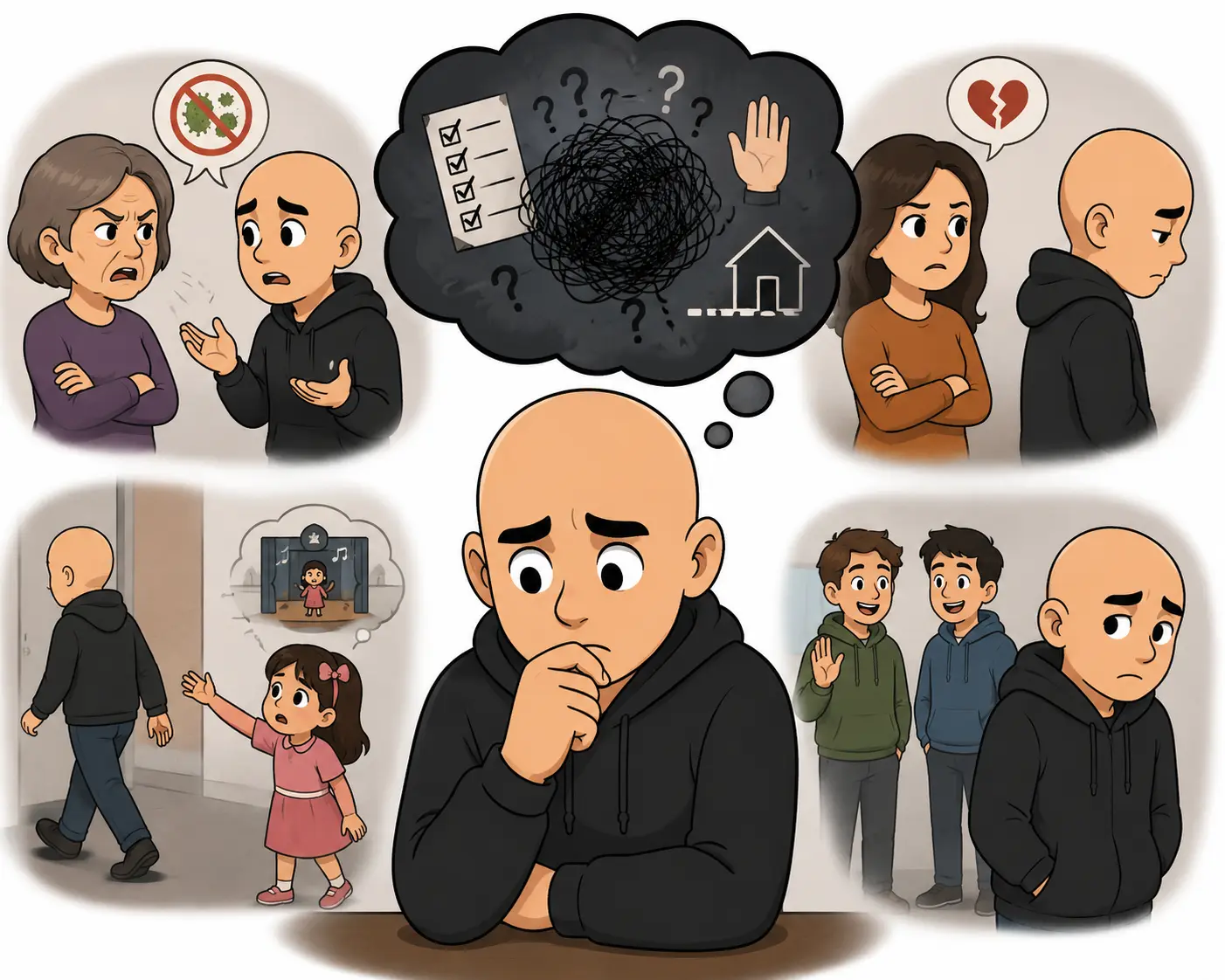
OCD can make relationships difficult because many behaviors do not make sense to people who do not have the disorder. Friends, family members, and partners may assume the behavior is personal when it is not.
For example, my mother would sometimes become upset when I said something was contaminated. She thought I was calling her dirty or saying something negative about her.
The reality was completely different.
I was not worried about dirt, germs, or hygiene. I was worried about metaphysical contamination, a form of OCD where a person fears that an object, place, person, or experience has become contaminated by something intangible such as bad luck, a curse, or a negative association.
No matter how hard I tried to explain it, there was no switch I could simply turn off in my brain. OCD was creating the fear, not me.
How OCD Affected My Daughter
OCD also affected my relationship with my daughter.
There were school events, performances, dances, and activities I missed because I was afraid of being triggered. I feared hearing certain music, seeing certain words, or encountering something that would set off my OCD.
Looking back, those are some of the moments I regret most.
My daughter understands that I have OCD, but understanding does not erase the time I lost. That is one of the hardest truths about this disorder.
When OCD Makes Decisions For You
One of the most frustrating things about OCD is how often it makes decisions for you.
Sometimes my wife wants to go somewhere, but OCD says I cannot. Sometimes I want to visit someone, but OCD insists I complete certain mental rituals first. Other times OCD tells me I cannot leave the house until I perform rituals involving property lines, thoughts, images, or other compulsions.
There have been periods of my life where OCD influenced nearly every decision I made.
It has affected where I go, who I talk to, what I touch, and how I spend my time.
That kind of control eventually impacts the people around you as well.
Friends Often Misunderstand
OCD can also damage friendships.
Many friends eventually assume you are ignoring them, avoiding them, or no longer interested in maintaining the relationship. In reality, the problem is often much more complicated.
For me, there were times when I avoided communication because I was afraid of hearing a word, phrase, or topic that might trigger my OCD. The less I communicated, the easier it felt to avoid the anxiety.
Unfortunately, avoidance comes with a cost.
The people around me were never fighting my OCD. They were living with the consequences of it.
The Role of Family and Partners
Being the spouse, friend, or family member of someone with severe OCD is not easy.
Patience, understanding, and education can make a tremendous difference. One of the most helpful things a loved one can do is create an environment where the person with OCD feels safe talking openly about their struggles.
The fears may not be based in reality, but the anxiety is very real to the person experiencing it.
That does not mean loved ones should become responsible for managing OCD. It also does not mean they should tolerate abuse or harmful behavior.
OCD can place enormous strain on even the strongest relationships.
Taking Responsibility for Recovery
As difficult as OCD can be, it is ultimately my responsibility to manage it.
My wife, friends, and family can support me, but they cannot do ERP for me. They cannot take my medication for me. They cannot fight my compulsions for me.
Their role is to support and encourage. My role is to continue working toward recovery.
OCD can place enormous strain on relationships, but treatment can help. Through ERP therapy, medication, and professional support, many people with OCD learn how to reduce the disorder's impact on both themselves and the people they love.
OCD wants us to believe that rituals protect the people we love. Looking back on my life, I learned the opposite. The rituals often kept me away from the people I loved most.