

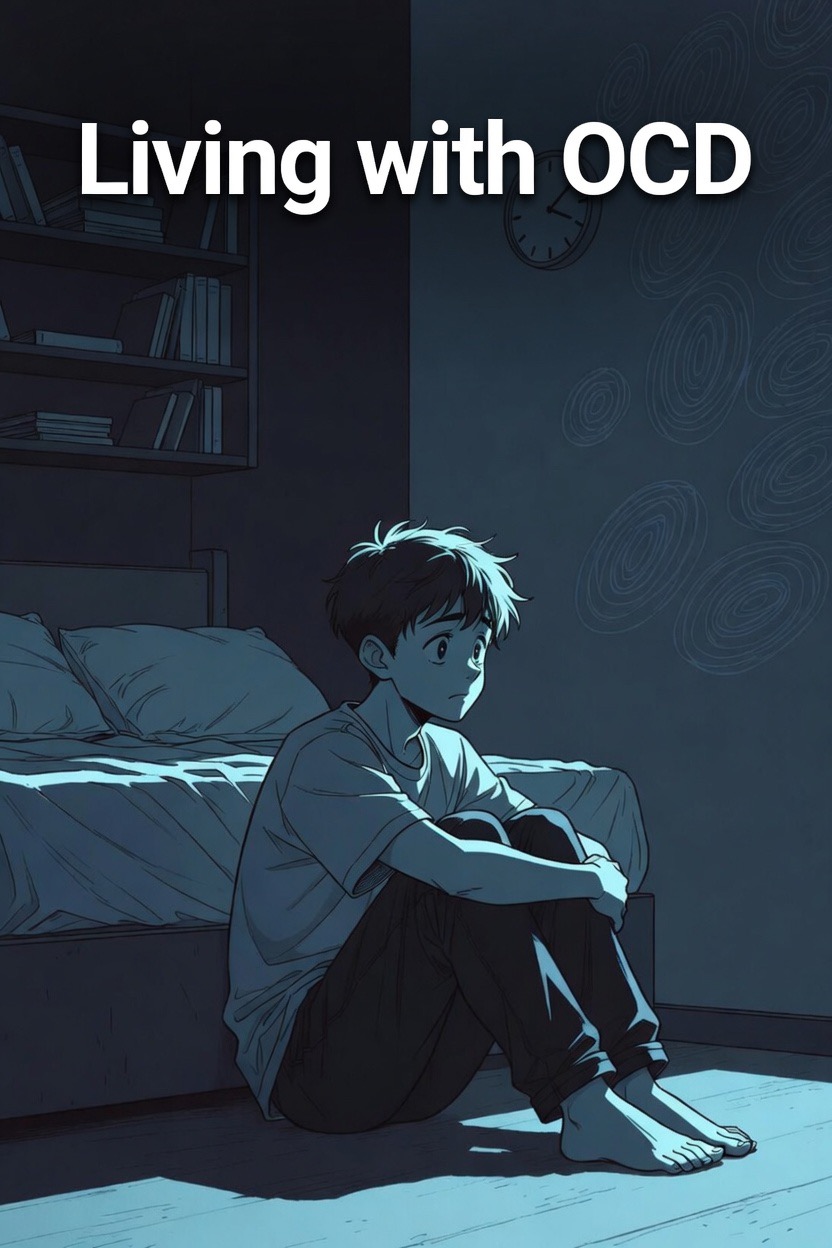
“It’s All in Your Head” - A Common Misunderstanding About OCD
One of the most frustrating things people with Obsessive-Compulsive Disorder (OCD) hear is: “It’s all in your head.”
After years of watching me struggle through endless compulsive loops, my wife once said those words. To me, it highlighted a common misunderstanding about OCD. Many people still see OCD as nothing more than a psychological issue or a lack of willpower.
The reality is far more complex.
OCD Is More Than a Habit or a Lack of Willpower
OCD is not simply a habit, a personality trait, or a failure to control your thoughts. Research has shown measurable differences in brain activity and function in people with OCD. Scientists have observed these differences using brain imaging technologies and decades of neurological research.
While you cannot see OCD the way you can see a broken bone or a physical injury, its effects on the brain can be observed and studied.
That does not mean people around us will fully understand what we experience.
Why Others May Not Understand OCD
In fact, expecting others to completely understand OCD may be unrealistic. Most people have never experienced the relentless doubt, fear, urgency, and mental exhaustion that OCD creates. It would be unfair to expect them to know exactly what it feels like.
What we can hope for is support.
The Importance of Support
I do not expect my wife to understand every detail of my OCD. What I do expect is love, patience, and encouragement while I do the hard work of managing it.
Because OCD is my responsibility.
Recovery Requires Personal Responsibility
No one else can do exposure therapy for me. No one else can challenge my compulsions for me. No one else can make the difficult choices required for recovery.
Family, friends, and spouses can support us, but they cannot walk the path on our behalf.
If you are living with OCD, remember this:
The road ahead may be difficult. There will be setbacks, frustration, and days when you feel exhausted. But recovery begins when you accept responsibility for your treatment while also allowing others to support you along the way.
Building a Strong Support System
Build a strong support system. Find qualified medical professionals. Learn about your condition. Surround yourself with people who encourage your progress rather than enable your compulsions.
Most importantly, keep moving forward.
Final Thoughts
OCD may be part of your life, but it does not have to control it.