

Living With Severe OCD: My Experience
When most people hear the term obsessive-compulsive disorder (OCD), they often think of cleanliness, organization, or someone who likes things arranged a certain way. While those experiences can be part of OCD, the reality of living with severe OCD is often very different.
For me, OCD became a condition that influenced nearly every part of my daily life. It was not just about unwanted thoughts. It was about intense anxiety, endless doubt, and a constant urge to perform rituals in order to feel safe.
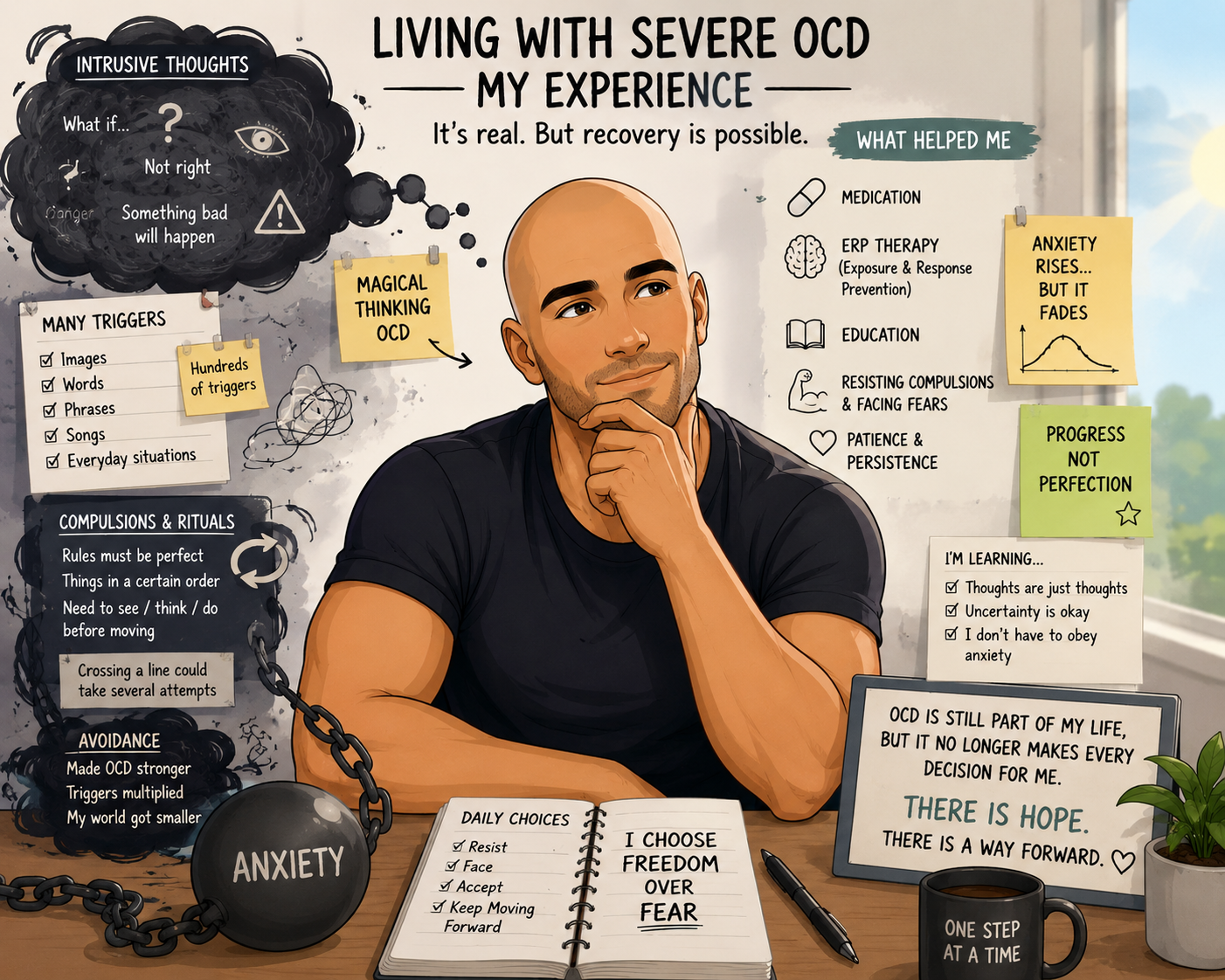
Over time, I developed hundreds of triggers connected to images, words, phrases, songs, and everyday situations that most people would never think twice about.
Magical Thinking OCD and Daily Rituals
One of my most difficult struggles involved magical thinking OCD. My brain would convince me that certain actions, thoughts, or objects could somehow influence unrelated events. Even when I knew these fears were irrational, the anxiety felt completely real.
At one point, crossing a simple property line became a major challenge. My mind created complicated rules about which images I had to see, what thoughts I needed to have, or what order things had to happen in before I could move forward.
Why Avoidance Made OCD Worse
Like many people with OCD, I spent years trying to avoid triggers. I believed that avoiding certain situations, words, or reminders would make my anxiety disappear. Instead, the opposite happened. The more I avoided, the larger OCD became.
Compulsions provided short-term relief, but they also taught my brain that the fear mattered. OCD would always return with another demand, another doubt, or another reason to perform a ritual.
OCD Recovery Takes Practice
Treatment has not been quick or easy. Recovery has involved medication, exposure and response prevention therapy, education, and a willingness to face fears repeatedly.
ERP teaches people with OCD to experience anxiety without performing compulsions. It is uncomfortable, but it works because the brain learns that feared outcomes do not need rituals to prevent them.
Today, OCD is still part of my life, but it no longer makes every decision for me. That change did not happen overnight. It happened through persistence, treatment, and continuing even when anxiety felt overwhelming.