

 Paste this into the Article HTML box:
OCD and Dieting: What Losing 105 Pounds Did and Did Not Change
In September 2025, I weighed approximately 293 pounds (132 kg). Ten months later, I weigh 187.6 pounds (85 kg). Despite losing more than 105 pounds, I still have OCD.
Recently, someone asked whether losing that much weight reduced my OCD symptoms. My answer was simple: not really.
What it did improve was my overall quality of life. I have more energy, better mobility, less physical discomfort, and generally feel healthier. When you live with OCD, any improvement in quality of life can matter.
Can Weight Loss Help OCD?
The reason she asked is because researchers continue to study possible links between inflammation, hormones, and mental health conditions, including OCD.
Some research suggests that certain dietary patterns may influence inflammation in the body, while other studies have explored how hormonal changes can affect anxiety and obsessive-compulsive symptoms in some individuals. Body fat also plays a role in hormone regulation through an enzyme called aromatase, which converts testosterone into estrogen.
However, OCD is a highly individual condition. Some people report improvements after losing weight, changing their diet, or improving their overall health. Others may notice little or no change in their symptoms.
My experience falls into the second category. Losing weight has been one of the best things I have done for my physical health, but it has not significantly reduced my OCD.
That said, I would still encourage people to focus on improving their health. What did not work for me may work for someone else.
Prozac, Appetite, and Weight Loss
One thing that has helped my weight-loss efforts has been Prozac (fluoxetine). In my case, it reduced my appetite and made dieting easier.
It is important to note that medication effects vary from person to person. Some people lose weight while taking Prozac, while others experience little change. Clinical studies generally show that fluoxetine can cause modest weight loss in some individuals, especially during the early stages of treatment.
If you are taking an augmentation medication such as Risperdal (risperidone), be aware that some medications in this category may increase appetite and contribute to weight gain. For some people, hunger can become a serious challenge even when they are not physically hungry.
Exercise and OCD
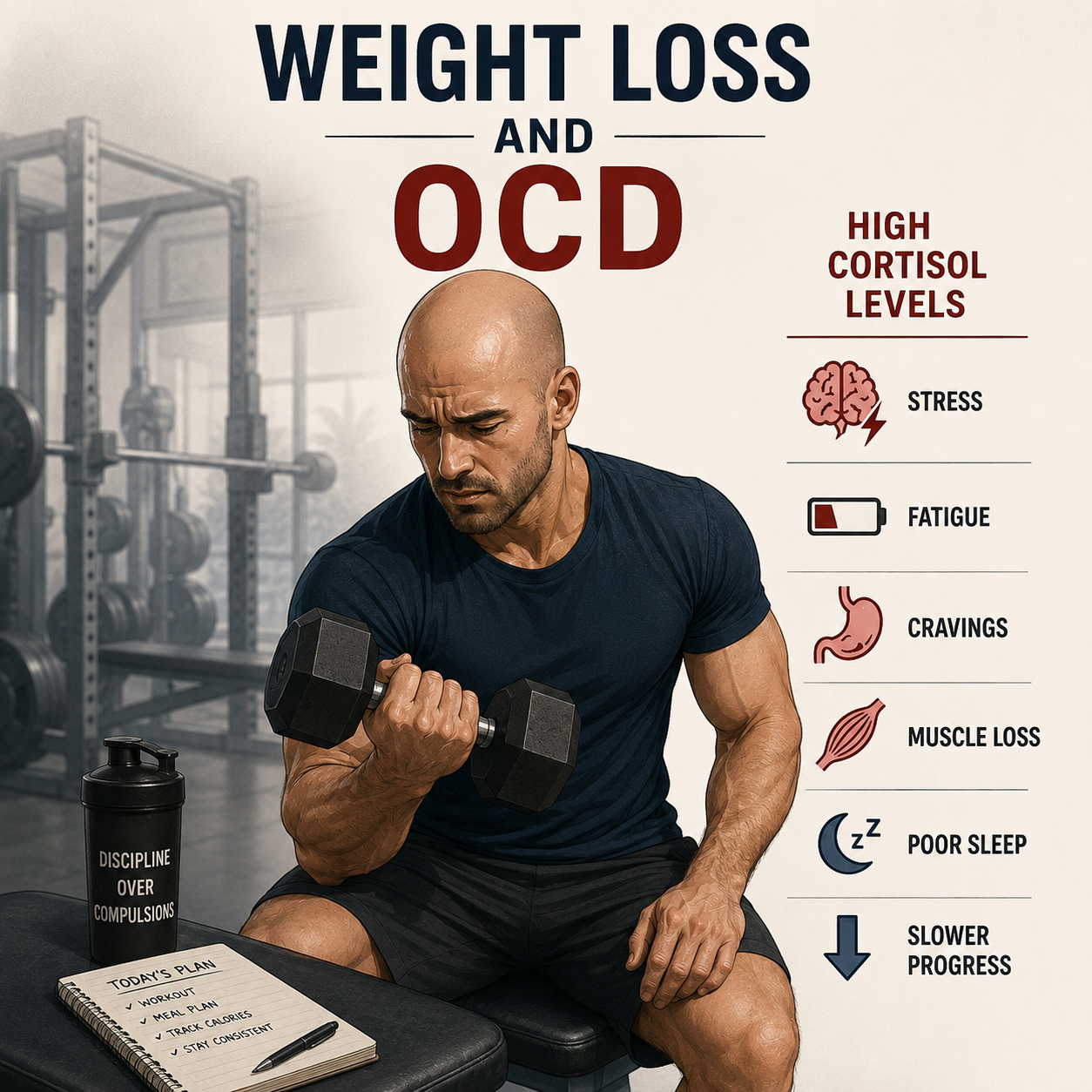
Exercise is often recommended for reducing stress and improving mental health, and I believe it can help many people.
For me, however, there seems to be a point where too much exercise becomes counterproductive. Once I reach around 40 minutes of continuous walking, I often notice an increase in intrusive thoughts and anxiety.
Because of that, I prefer splitting my walks into three separate 20-minute sessions throughout the day.
I have noticed something similar with weight training. As fatigue increases, my intrusive thoughts sometimes become more noticeable. When I know I have a busy day ahead, I often keep my workouts shorter and more manageable.
This is only my personal experience and should not be taken as medical advice. Many people with OCD find exercise extremely helpful.
The Unexpected Advantage of Dieting With OCD
This may sound strange, but in some ways dieting has been easier than living with OCD.
My OCD often attaches itself to food and drinks, especially through magical thinking. Certain foods become allowed, while others become forbidden because of obsessive fears and irrational rules.
Ironically, this sometimes makes dieting easier because my OCD already limits many of my choices.
That does not mean it is easy. There are plenty of days when I want to eat something specific and feel unable to because of OCD.
That is where Exposure and Response Prevention (ERP) comes in.
ERP asks us to deliberately face the fears that OCD creates while resisting the urge to perform compulsions. It is uncomfortable, exhausting, and often frustrating.
In many ways, ERP has been the toughest workout I have ever done.
Losing weight required consistency and discipline. Living with OCD requires those same qualities every single day.
And while I may have lost more than 100 pounds, the real challenge remains learning how to live with uncertainty and keep moving forward despite OCD.