

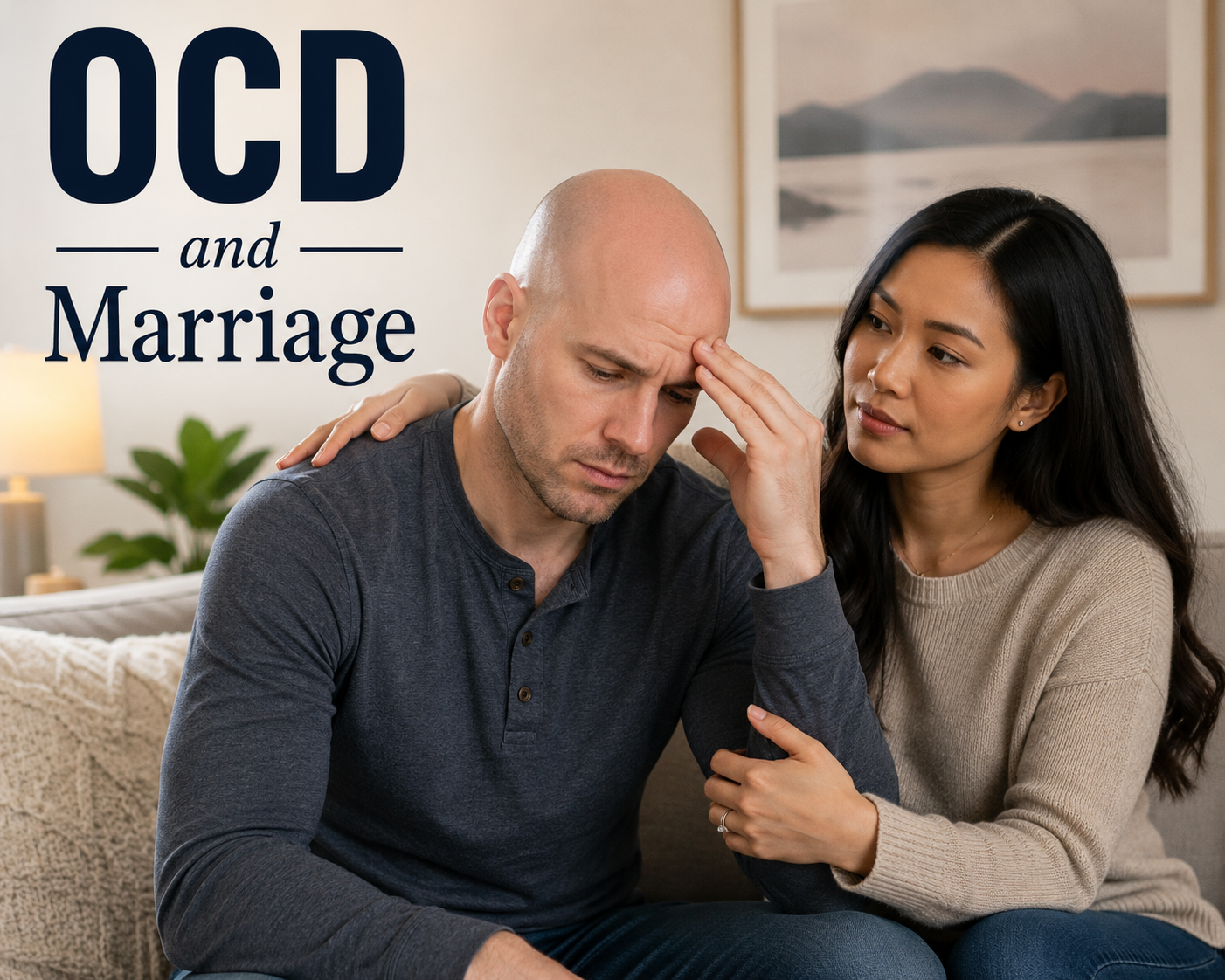
OCD and Marriage: What It Takes to Make It Work
I am now entering my third year of marriage, and I have to be honest: OCD has made marriage more difficult.
That does not mean marriage itself is the problem. Every marriage has its own struggles. But when one partner has obsessive-compulsive disorder, it can create extra friction, stress, and misunderstanding inside the relationship.
Living with OCD requires a tremendous amount of love, patience, communication, and responsibility from both people.
When Your Partner Does Not Fully Understand OCD
There are days when I feel like my wife still does not fully believe how serious my OCD is. But on my bad days, when my symptoms spike and my compulsive urges feel almost uncontrollable, she sees very quickly that OCD is real and severe.
That is one of the hardest parts of OCD in a marriage. The person without OCD may not always understand what is happening internally. They may only see the behavior, the frustration, the avoidance, or the rituals.
That can be painful for both people.
OCD Is the Responsibility of the Person Who Has It
I think this is important to say clearly: a spouse is not required to stay in a relationship that makes them deeply unhappy, unsafe, or emotionally harmed.
OCD may explain certain struggles, but it does not excuse abusive behavior. The person with OCD is still responsible for seeking treatment, managing symptoms, and being mindful of how their behavior affects the people around them.
The role of a spouse or partner is not to become a therapist. Their role is to offer love, support, patience, and encouragement while the person with OCD does the work of treatment and recovery.
Being Mindful During OCD Spikes
When I am going through a severe OCD spike, I have to remind myself to be careful with my behavior, especially around my wife and child.
That means I cannot take my frustration, fear, or anger out on them.
When I feel triggered, I often try to be alone for a while. I create distance so I can calm myself down and avoid making the situation worse. My wife can usually tell when something has triggered me, and she often gives me quietness and space.
That space helps.
Communication Helps Reduce Damage
One thing I have gotten better at is telling my wife when something triggers me.
Instead of hiding it or letting it build quietly, I can usually tell her when it happens. That gives us both a chance to make adjustments and decide what to do next.
Good communication does not make OCD disappear, but it can reduce confusion and prevent unnecessary arguments.
What Support Can Look Like
My wife has supported me through expensive psychiatrist visits, medication changes, and difficult days when OCD felt overwhelming.
At night, she will sometimes make me chamomile tea to help me sleep and feel calmer. Small things like that matter.
Support does not always have to be dramatic. Sometimes it is patience, quietness, understanding, or helping create a calmer environment when symptoms are high.
Both Partners Have Responsibilities
In a marriage affected by OCD, both people have responsibilities.
The person with OCD has the responsibility to seek treatment, stay consistent with care, practice tools like Exposure and Response Prevention, and take ownership of their behavior.
The spouse has the responsibility to be supportive, honest, and loving without becoming responsible for the OCD itself.
Those are not the same thing.
Making Marriage Work With OCD
I am not here to tell anyone how to handle their marriage because every relationship is different.
What I can say is that OCD has caused problems in my own marriage. I have told my wife before that if my OCD ever becomes too much for her, she has the right to leave. That is not easy to say, but I believe it is honest.
Being married to someone with OCD can be difficult. Sometimes I feel guilty for what my wife has had to go through with me.
But I also believe that if both people communicate, set healthy boundaries, and work together, the marriage has a better chance.
OCD can put pressure on a marriage, but responsibility, treatment, communication, and real support can help reduce the damage.