

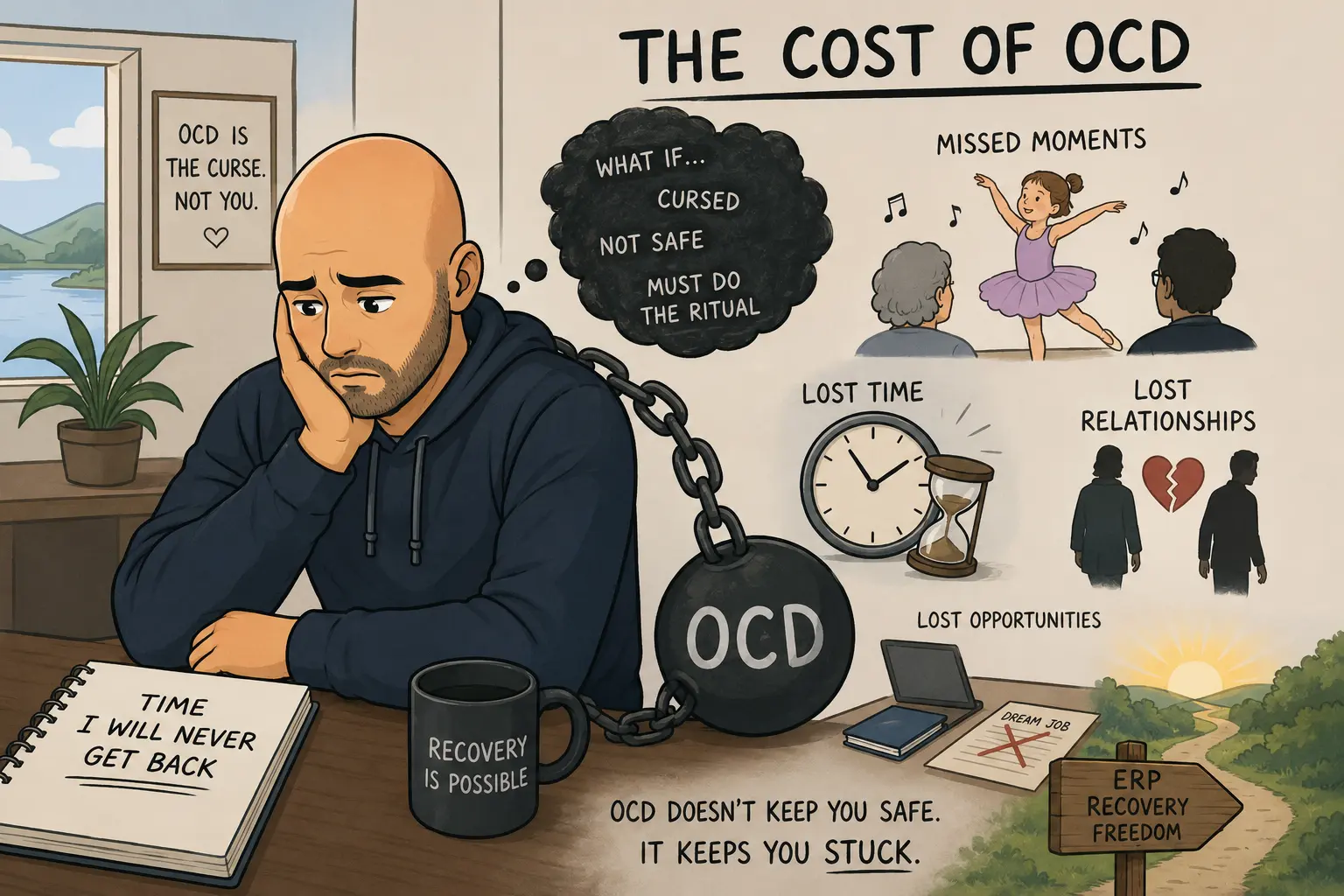
The Cost of OCD
One of the hardest parts of living with OCD is looking back at everything it has cost me. More than the rituals, more than the anxiety, and more than the endless hours spent trapped in my own mind, I think about the people and moments I missed.
I think about my daughter.
She understands that I have OCD, and she knows it was difficult raising her as a single father while battling a severe mental illness. But understanding does not erase the reality that I missed important moments in her life.
There were school performances, dances, and events that I did not attend because I was afraid of being triggered. I worried that I would hear certain music, see certain words, or encounter something that would set off my OCD. Instead of being there, her grandmother often attended those events with her.
That is painful to admit.
I can earn more money. I can buy another car. I can replace many things. The one thing I can never get back is time.
OCD Is Not Keeping You Safe
If you are reading this and OCD is controlling your life, I need to tell you something I wish I had fully understood years ago: OCD is not protecting you.
It feels like protection. It feels like caution. It feels like responsibility. But what it is really doing is taking pieces of your life away one ritual at a time.
Life can feel long when you are trapped in anxiety, but the years pass quickly. The hardest part of fighting OCD is often taking the first step, whether that means starting ERP therapy, talking to a doctor, considering medication, or finally choosing to resist one compulsion.
I miss my daughter every day. I miss my country. I left a lot behind because I was terrified of the triggers I associated with life back in the United States. My daughter could have come with me, but she chose to stay for school. I do not blame her at all.
Still, I know OCD played a role in the distance and time I lost.
OCD Takes More Than People Realize
My OCD often told me that things would be cursed if I did not perform certain rituals. But as one of my closest friends once told me, OCD itself was the curse.
OCD never once thanked me for the sacrifices I made for it. It only demanded more.
I think about the hours I spent every day performing rituals. Even now, I can still get caught in long compulsive loops involving property lines and other triggers. When I add up the years, it likely equals tens of thousands of hours lost to OCD.
That is time I could have spent with family. Time I could have spent building a career. Time I could have spent enjoying life instead of trying to satisfy a disorder that was never satisfied.
I remember sitting on my bed crying, wishing someone or something could save me and make the thoughts stop. I remember the pain, the exhaustion, and even physical injuries that happened because of rituals. Much of it happened alone, where no one could see how bad it really was.
Feelings Are Not Facts
This article is not meant to scare you. It is meant to be honest.
If you do not begin fighting OCD, it can take far more from you than you realize. That fight may include ERP therapy. It may include medication under a doctor's care. It may include support from family, friends, or professionals. But doing nothing gives OCD permission to keep taking.
OCD is not your fault. It is a disorder rooted in the way the brain processes fear, doubt, and uncertainty. But even though it is not your fault, recovery still requires action.
The fear feels real. The anxiety feels real. The thoughts feel urgent. But feelings are not facts.
If OCD has already cost you time, relationships, opportunities, or memories, you are not alone. I understand that pain deeply. But the next choice still matters.
Start small if you have to. Resist one ritual. Delay one compulsion. Talk to a doctor. Find an ERP therapist. Do one thing today that OCD told you not to do.
Because OCD is not keeping you safe. It is keeping you stuck.