

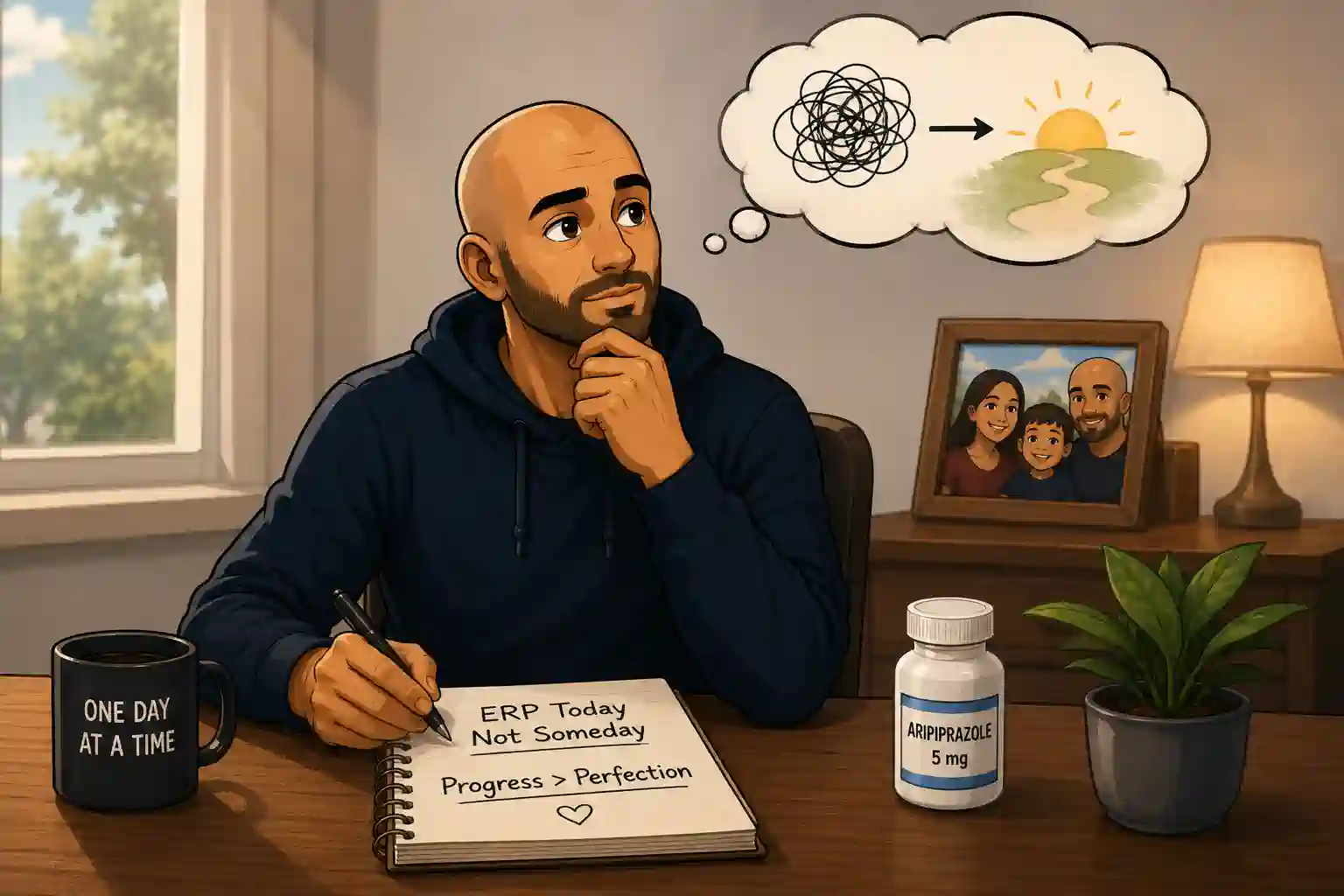
There Is Never a Perfect Time to Start ERP
It is never a good time to begin ERP.
I can say that from experience.
There was always something important happening. Something with family. Something with work. Something I had bought. Something I did not want “contaminated.” Something I did not want ruined by a trigger.
So I would put ERP off.
I would tell myself I would begin after the important event passed. After I bought the item. After the day reset. After the anxiety calmed down. After things felt safer.
The problem is that OCD always finds another reason to delay.
There is always another important day, another important object, and another reason to wait.
That is one of the traps of OCD. It convinces you that recovery should begin only when life feels safe enough to begin. But if you wait for OCD to agree that it is a good time, you may be waiting forever.
OCD Makes the Current Fear Feel Urgent
OCD has a way of making the current obsession feel like the most important thing in the world.
The trigger you are facing right now feels different.
The word you heard today feels different.
The object you bought today feels different.
The event happening tomorrow feels too important to risk.
That is how OCD keeps you stuck.
For me, my OCD often involved magical thinking and metaphysical contamination. A word, thought, song, or trigger could make something feel contaminated or cursed. If I bought something on the wrong day or after the wrong trigger, my OCD could tell me the item was ruined.
That made ERP feel dangerous.
Why would I purposely expose myself to a trigger when something important was happening?
Why would I risk contaminating something I cared about?
But that was the whole point. OCD was using the importance of my life against me.
Two Weeks Later, the Fear Often Looks Different
One thing I have learned through repeated ERP work is that many triggers do not feel the same after enough exposure.
At first, the trigger feels huge.
It feels dangerous.
It feels like it needs immediate attention.
But after days or weeks of practicing exposure and resisting compulsions, the same trigger often loses power.
I have seen this many times with triggering words.
A new word appears. OCD tells me it is dangerous. I wonder whether I should add it to my exposure list. Part of me wants to avoid it because important things are happening.
But I have been through this pattern enough times to know something important.
If I keep avoiding it, the fear usually grows.
If I face it through ERP, the fear usually fades.
Not always instantly. Not perfectly. Not without discomfort. But often enough that I trust the process more than I trust OCD.
OCD Does Not Protect You
OCD wants you to believe that compulsions protect you.
It tells you that rituals keep you safe.
It tells you that avoidance prevents disaster.
It tells you that you must obey to protect the people, places, and things you care about.
But in my life, OCD has not protected me.
In fact, it has often done the opposite.
One example I think about often happened when I was putting on a pair of shorts. My OCD told me I had done it wrong because the ritual was not correct. So I repeated it. I tried again. I kept obeying the ritual.
During that process, I injured my back and later needed medical care. OCD did not protect me from that. The ritual did not make me safer. If anything, obeying the compulsion helped create a situation where I got hurt.
That memory reminds me of something important.
OCD promises safety, but it does not actually control safety.
It only controls how much of your life you give to it.
There Is Always a Reason to Wait
When OCD tells you it is not a good time to begin ERP, it may sound reasonable.
Maybe you have a family event tomorrow.
Maybe you have work coming up.
Maybe you just bought something expensive.
Maybe you have something important you do not want connected to a trigger.
I understand that fear.
If your OCD involves magical thinking, you might worry that starting ERP today will somehow contaminate or curse something important.
But waiting rarely solves that problem.
Life does not pause for OCD.
The family event still comes.
The workday still comes.
The purchase still happens.
The future keeps moving whether you do compulsions or not.
That is why waiting for the perfect moment often becomes another compulsion.
Starting Small Still Counts
I do not think everyone needs to jump into the hardest exposure immediately.
ERP should ideally be planned with a qualified therapist, especially when symptoms are severe.
But beginning does not always mean doing the biggest, scariest exposure first.
Sometimes beginning means making the appointment.
Sometimes it means writing down your hierarchy.
Sometimes it means refusing one small compulsion.
Sometimes it means letting one uncomfortable thought stay without trying to fix it.
Sometimes it means sending an email to a doctor or therapist instead of waiting another month.
Those small steps matter.
Right Now Is Usually Better Than Perfect
There may never be a perfect time to begin ERP.
There may never be a perfect time to start medication management with a doctor.
There may never be a day when OCD says, “Now is safe. Now you can recover.”
That is not how OCD works.
OCD survives by delay, doubt, and avoidance.
Recovery begins when you stop waiting for OCD to approve your next step.
For me, ERP has never been convenient. It has never arrived at the perfect time. It has always asked me to face fear while life was still happening around me.
But that is also why it matters.
The goal is not to recover in a perfect empty room where nothing important is happening.
The goal is to recover inside real life.
And real life starts now.